If you’re trying to figure out how to choose best hosting company for wordpress, the real challenge isn’t choosing a provider. It’s understanding what actually makes one hosting environment perform better than another when your website starts growing.
At the beginning, everything feels simple. Your website loads fast, pages respond instantly, and performance doesn’t seem like something you need to think about.
But growth changes that.
As traffic increases, small issues start to appear. Pages take slightly longer to load, interactions feel heavier, and users start leaving earlier than before.
Nothing breaks suddenly, but the experience slowly declines.
That’s when hosting stops being invisible and starts becoming the reason behind your results.
In this guide, you’ll learn how to best hosting company for wordpress.You’ll compare performance, uptime, WordPress features, security, support, pricing, and scalability. You’ll also see what separates average hosting from a provider that is actually built to support long-term growth.
Why Your Hosting Choice Matters More Than You Think
Most people treat hosting like a basic setup step.
Pick a provider, launch the website, and move on.
But in reality, hosting affects everything that happens after that.
From how fast your pages load to how long users stay on your site, your hosting environment plays a direct role.
Some users still ask whether they can build a WordPress site without hosting, but the better question is whether their hosting is strong enough to support their website as it grows.
How Hosting Affects Your Website Speed and SEO
Website speed is one of the strongest factors behind user experience, and fast-loading websites usually create better engagement and retention than slow ones. Hosting performance directly affects server response time, stability under load, and how quickly content is delivered to visitors.
That means your hosting choice affects more than technical performance. It influences bounce rate, conversions, and how well your website performs as traffic grows.
The Real Cost of Choosing the Wrong Hosting Provider
Poor hosting rarely causes immediate failure.
Instead, it creates a chain reaction.
At first, performance drops slightly. Then engagement starts to decline. Eventually, conversions decrease.
For example, if your checkout page slows down during peak traffic, users are far more likely to abandon their purchase.
Over time, these small losses compound into real business impact.
Types of WordPress Hosting: Which One Is Right for You?
Before comparing features, it helps to understand that not every hosting type fits every website. Choosing the wrong type of hosting is one of the most common mistakes website owners make.
| Hosting Type | Best For | Main Advantage | Main Limitation |
| Shared Hosting | New blogs and small websites | Lower cost and easy entry | Limited performance under growth |
| Managed WordPress Hosting | Serious websites, business sites, and growing brands | Better WordPress optimization, security, and support | Higher cost than basic shared plans |
| VPS / Cloud Hosting | Advanced projects and custom environments | More control and dedicated resources | Requires more technical knowledge or managed support |
If your website is meant to grow, generate leads, publish content regularly, or support a business, managed WordPress hosting is usually the stronger long-term choice because it reduces technical friction while improving stability and performance.
What Should You Look for Before Buying WordPress Hosting?
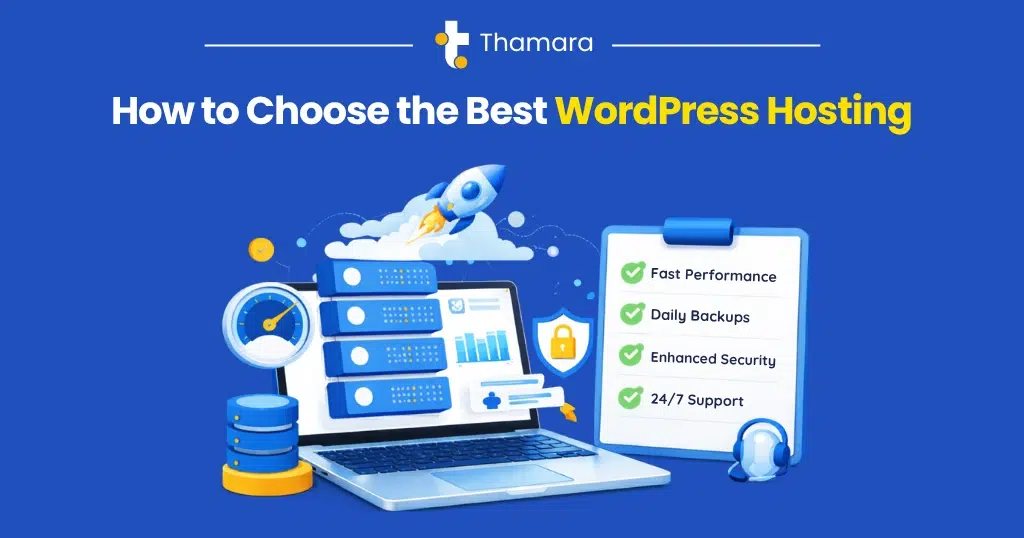
If you want to make the right decision, do not only compare prices. The best way to best hosting company for wordpress is to evaluate the environment behind the plan.
Ask practical questions such as whether the provider offers real backups, whether it can handle traffic spikes, whether support is available when something breaks, and whether the platform is actually optimized for WordPress instead of simply labeling itself that way.
That brings us to the core checklist.
Factor #1 — Performance and Speed

When comparing hosting providers, performance is where the real differences appear.
Many providers advertise speed, but not all of them can maintain it under pressure.
What Is Server Response Time and Why It Matters
Server response time is the time it takes for your server to respond to a request.
If this response is slow, everything else becomes slower, regardless of how optimized your website is.
Even a well-designed site cannot compensate for a weak hosting environment.
Look for LiteSpeed, NVMe Storage, and CDN Support
High-performance hosting relies on infrastructure, not just features.
LiteSpeed servers process requests faster. NVMe storage allows quicker data access. CDN systems deliver content closer to users.
This combination is what defines real WordPress hosting speed performance.
For example, a blog post that suddenly goes viral can remain fast on a strong hosting setup, while weaker environments may slow down or crash entirely.
With Thamara Hosting, performance is one of the clearest competitive advantages. The platform highlights NVMe SSD storage and LiteSpeed-based WordPress acceleration in its hosting stack.It also includes Object Cache for WordPress, premium cache management, and global CDN integration.These features help deliver content faster and improve responsiveness under heavy load.
Factor #2 — Uptime Reliability
Uptime is often simplified into a percentage, but that number doesn’t tell the full story.
What Is a 99.9% Uptime Guarantee?
A 99.9% uptime guarantee still allows downtime.
The real concern is when that downtime happens.
If it occurs during peak traffic, the impact becomes significantly higher.
How to Verify a Host’s Uptime Claims
To evaluate uptime properly, you need to go beyond marketing claims.
Look at uptime guarantees, the host’s architecture, public trust signals, and whether the platform is designed to stay stable during growth or sudden traffic increases.
That is one reason Thamara is positioned differently from many low-cost providers. Its plans emphasize 99.9% uptime, custom-optimized servers, and infrastructure built for speed and stability, rather than presenting hosting as a one-size-fits-all commodity.
Factor #3 — WordPress-Specific Features
Hosting built specifically for WordPress behaves differently from general hosting environments.
One-Click WordPress Installation
This simplifies setup, especially for beginners, but it’s only the starting point.
Automatic WordPress Updates and Staging Environments
Automatic updates keep your site secure.
Staging environments allow you to test changes safely before going live.
These features are part of the best WordPress hosting features that support long-term growth.
Thamara includes several WordPress-specific capabilities that make it more practical than generic shared hosting, including 1-click WordPress installation, Smart WordPress Auto Updates, WordPress Multisite Support, WP-CLI & SSH access, WordPress Toolkit, and Staging Environment on higher plans.
That matters because the best WordPress hosting is not just storage space. It is an environment designed to make WordPress easier to run, safer to update, and more scalable over time.
Factor #4 — Security Features
Security becomes more important as your website grows and attracts more traffic.
Free SSL Certificates and Daily Backups
SSL encryption protects user data, while backups ensure you can recover quickly if something goes wrong.
Malware Scanning and DDoS Protection
These features protect your website from attacks and keep it stable under pressure.
Without proper security, even high-performing websites can become unreliable.
That’s why security is a core part of any serious WordPress hosting checklist.
Thamara strengthens this area with free SSL, WAF protection, malware scanning and removal tools, DDoS protection, and Imunify360-based security features promoted across its hosting offerings.
If you are comparing providers, this is important because many cheap plans advertise security in vague terms, while stronger providers show exactly what layers are included.
Factor #5 — Customer Support Quality
At some point, every website experiences issues.
The difference lies in how quickly those issues are resolved.
Why 24/7 Live Support Is Non-Negotiable
Problems can happen at any time, and delays in support can lead to lost traffic or revenue.
How to Test a Hosting Provider’s Support Before Buying
You can test support by asking technical questions before purchasing.
Fast, clear, and knowledgeable responses are strong indicators of reliable support.
Thamara promotes 24/7 technical support across its hosting plans, and the site also emphasizes priority technical support and customer testimonials that highlight very fast response times and migration help.
For businesses, this matters more than many people think. A host is easy to love when nothing breaks. The real test is what happens when something does.
Factor #6 — Pricing and Value
WordPress domain name cost can be misleading if you only focus on initial costs.
Introductory Pricing vs Renewal Rates — The Hidden Trap
Many hosting providers offer low introductory prices but increase costs significantly later.
This is why affordable WordPress hosting is not always the best long-term option.
Lifetime Hosting Plans — Are They Worth It?
Lifetime deals can be appealing, but they should be evaluated based on performance and sustainability.
The real question is whether the provider can maintain quality over time.
This is one of the most distinctive areas where Thamara Hosting differentiates itself. Alongside regular monthly and annual structures, it promotes lifetime hosting plans, transparent plan details, free domain and SSL on annual and lifetime plans, and a 30-day money-back guarantee.
That combination matters because many competitors compete on low entry pricing, while Thamara is clearly trying to compete on long-term value and predictability.
Factor #7 — Scalability
Scalability determines whether your hosting can grow with your website.
When to Upgrade from Shared to Managed WordPress Hosting
As traffic increases, shared hosting becomes limiting.
This is where the difference in managed vs shared WordPress hosting becomes clear, especially when performance starts to decline.
Many website owners begin exploring solutions like WordPress hosting for high traffic sites when their current setup can no longer maintain consistent performance.
Planning for Traffic Growth from Day One
Planning ahead prevents performance issues later.
This is why many users compare options such as the best WordPress hosting for high traffic before scaling becomes necessary.
This is also where the gap between average providers and performance-focused platforms becomes very clear.
Thamara’s WordPress plans are structured around growth, with published allocations for websites, visits, NVMe storage, bandwidth, backups, staging, migration support, and performance tooling. That makes it easier for users to match a plan to their current stage and future traffic expectations.
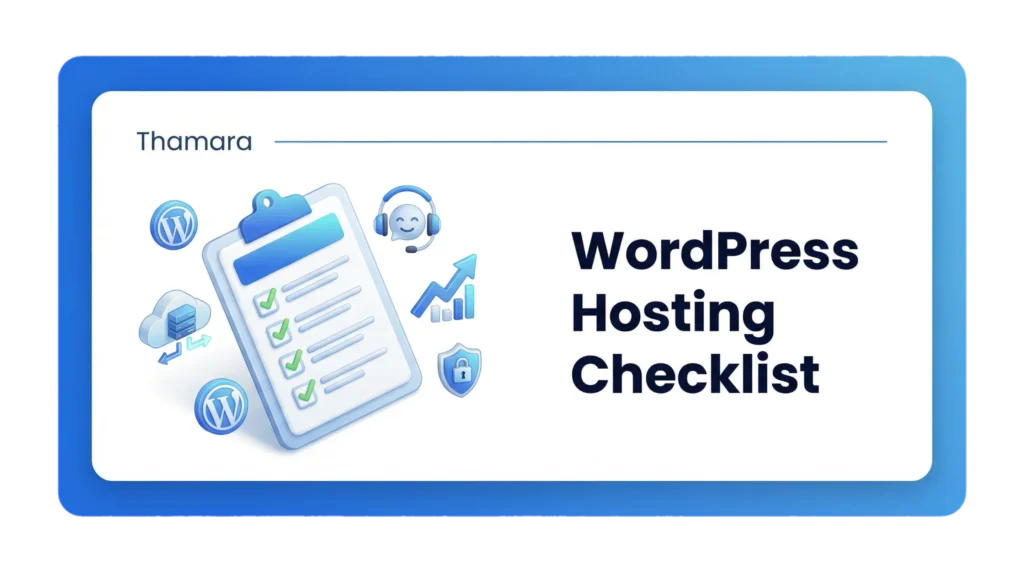
Questions to Ask Before Choosing a WordPress Host
If you want to best hosting company for wordpress carefully, ask these questions before paying for any plan:
| Question | Why It Matters |
| Is this hosting truly optimized for WordPress? | Generic hosting often lacks WordPress-specific performance and management features |
| Does it include NVMe storage, caching, or CDN support? | These affect speed and responsiveness directly |
| What backups are included, and how often are they created? | Recovery options matter when updates or attacks go wrong |
| Is support available 24/7, and is it technical support? | Fast help reduces downtime and stress |
| What happens when traffic grows? | You need a host that scales without major disruption |
| Are renewal terms transparent? | Low intro pricing can hide long-term cost |
| Is migration included? | Free migration saves time and lowers switching friction |
This checklist is important because a lot of hosting comparisons stay too general. The best buying decision usually comes from asking the provider the right questions before purchase, not after the problem appears.
How to Match Hosting to Your Website Type and Traffic Level
Not every website needs the same hosting setup.
If you are launching a small blog, a lighter managed plan may be enough. If you run a business site, a lead-generation website, or an eCommerce store, then speed, uptime, support, and backups become much more critical.
If you expect traffic growth, client work, multiple websites, or woocommerce cloud hosting,it usually makes more sense to best hosting company for wordpress that already includes better caching, stronger security, WordPress tooling, and room to scale.
That is one reason Thamara is positioned well for growing WordPress users. It is not only selling disk space. It is packaging performance, WordPress optimization, security, migration help, and business-focused tools into a more complete hosting environment.
Comparison: What Actually Defines a Strong Hosting Provider
| Factor | Average Hosting Providers | Performance-Focused Hosting Like Thamara |
| Speed | Often slows down under traffic | Built around NVMe, LiteSpeed, caching, and CDN support |
| Uptime | May be stable for basic use only | Structured to prioritize stability and published uptime guarantees |
| Security | Basic SSL and limited protection | SSL, WAF, DDoS protection, malware scanning, and Imunify360-based protection |
| WordPress Features | Minimal WordPress tooling | Auto updates, staging, WP-CLI, multisite support, optimization tools |
| Support | General support with slower escalation | 24/7 technical support and priority support on higher plans |
| Migration | Often paid or limited | Free automatic website migration |
| Pricing Logic | Low intro pricing, higher renewals | Transparent details, money-back guarantee, and lifetime hosting positioning |
Why Thamara Hosting Checks Every Box
After evaluating all these factors, the difference between average hosting and performance-focused hosting becomes clear.
Thamara Hosting stands out because it aligns with the exact checklist users should use when choosing the best WordPress hosting.
It combines NVMe SSD storage, LiteSpeed WordPress acceleration, Object Cache, premium cache management, global CDN integration, 24/7 technical support, free SSL, WAF and DDoS protection, malware scanning, free migration, WordPress staging, and Smart WordPress Auto Updates into one hosting environment.
It also differentiates itself commercially through lifetime hosting plans, which are rare in the market, along with free domain and SSL on qualifying plans, 30-day money-back guarantee, and bundles that include practical tools such as Perfmatters, ShortPixel, AI Engine, and in some plans Bricks Builder and MetForm.
For website owners who do not want to piece together speed optimization, security tooling, and WordPress support from multiple vendors, that is a meaningful advantage.
Why Thamara Can Be the Better Fit Than Many Competitors
A lot of competitors sell hosting as a cheap starting point.
Thamara is better positioned for users who care about what happens after launch.
That includes faster infrastructure, stronger WordPress optimization, clearer growth-oriented plans, migration support, premium tooling, and long-term pricing value.
If your goal is just to get any site online, many hosts can do that.
If your goal is to run a WordPress website that loads quickly, stays secure, scales smoothly, and is easier to manage, then Thamara offers a stronger overall package than many generic alternatives.
Final Verdict
If you want to know how to choose WordPress hosting, do not start with brand names.
Start with the checklist.
Look at performance, uptime, WordPress-specific features, security, support, pricing logic, and scalability.
Then compare providers based on those criteria, not just the lowest price on a landing page.
When you do that, Thamara Hosting becomes a very strong option because it performs well across the areas that matter most: speed, security, support, WordPress optimization, growth readiness, and long-term value.
That is what makes it more than just another hosting provider. It makes it a practical choice for users who want WordPress hosting that is built to perform, not just to exist.
FAQs
How do I choose the best WordPress hosting for my website?
You should choose WordPress hosting based on performance, uptime, WordPress-specific features, security, support quality, pricing transparency, and scalability. The best provider is the one that supports your website today and still performs well as your traffic grows.
What should I look for before buying WordPress hosting?
You should look for NVMe or high-performance storage, caching, CDN support, backups, SSL, malware protection, reliable uptime, strong support, and clear pricing terms. If the host is built specifically for WordPress, that is usually a major advantage.
Is managed WordPress hosting better than shared hosting?
For many serious websites, yes. Managed WordPress hosting usually offers better optimization, easier maintenance, stronger security, and more reliable performance than basic shared hosting.
Does hosting affect WordPress SEO?
Hosting affects the technical performance that shapes user experience, especially page speed, stability, and responsiveness. Better hosting creates a stronger foundation for performance-focused SEO work.
Why is Thamara Hosting a strong choice for WordPress websites?
Thamara combines NVMe storage, LiteSpeed acceleration, object caching, CDN support, WordPress-specific tools, security layers, free migration, and 24/7 technical support, while also offering long-term value through lifetime hosting plans and a 30-day money-back guarantee.
Are lifetime hosting plans worth it?
They can be worth it if the provider still offers strong performance, security, support, and long-term service quality. The real question is not just whether the plan is lifetime, but whether the infrastructure behind it is strong enough to justify the offer.
References
[1] 8 Essential Questions to Ask Before Choosing Web Hosting – Pressidium
[2] Getting started with WordPress: Choosing WordPress hosting – Gravity Forms
[3] Thamara Cloud Hosting | WordPress Hosting With Lifetime Plans